Enterprise AI implementation is not simply a matter of selecting a model and connecting an API. Production AI systems must fit business processes, data environments, security requirements, existing applications, and measurable organizational goals.
Many AI initiatives struggle because teams begin with technology before identifying the problem, ownership, data, and operating model. A stronger approach moves from strategy to controlled experimentation and then to production.
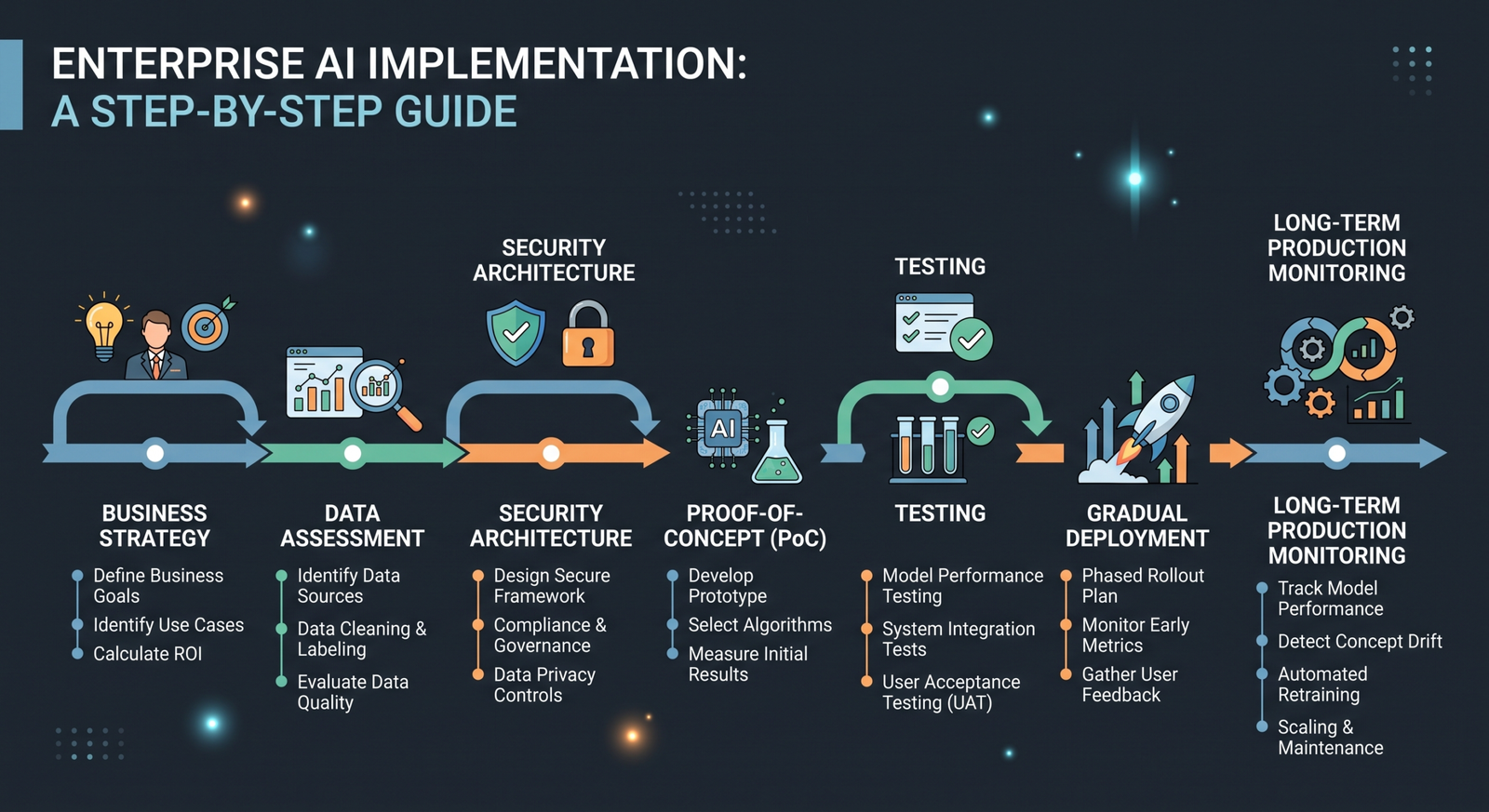
This guide outlines a practical framework for implementing enterprise AI from the first business discussion to long-term operation.
Step 1: Identify a High-Value Business Problem
Start with a problem that is important enough to justify investment and specific enough to measure.
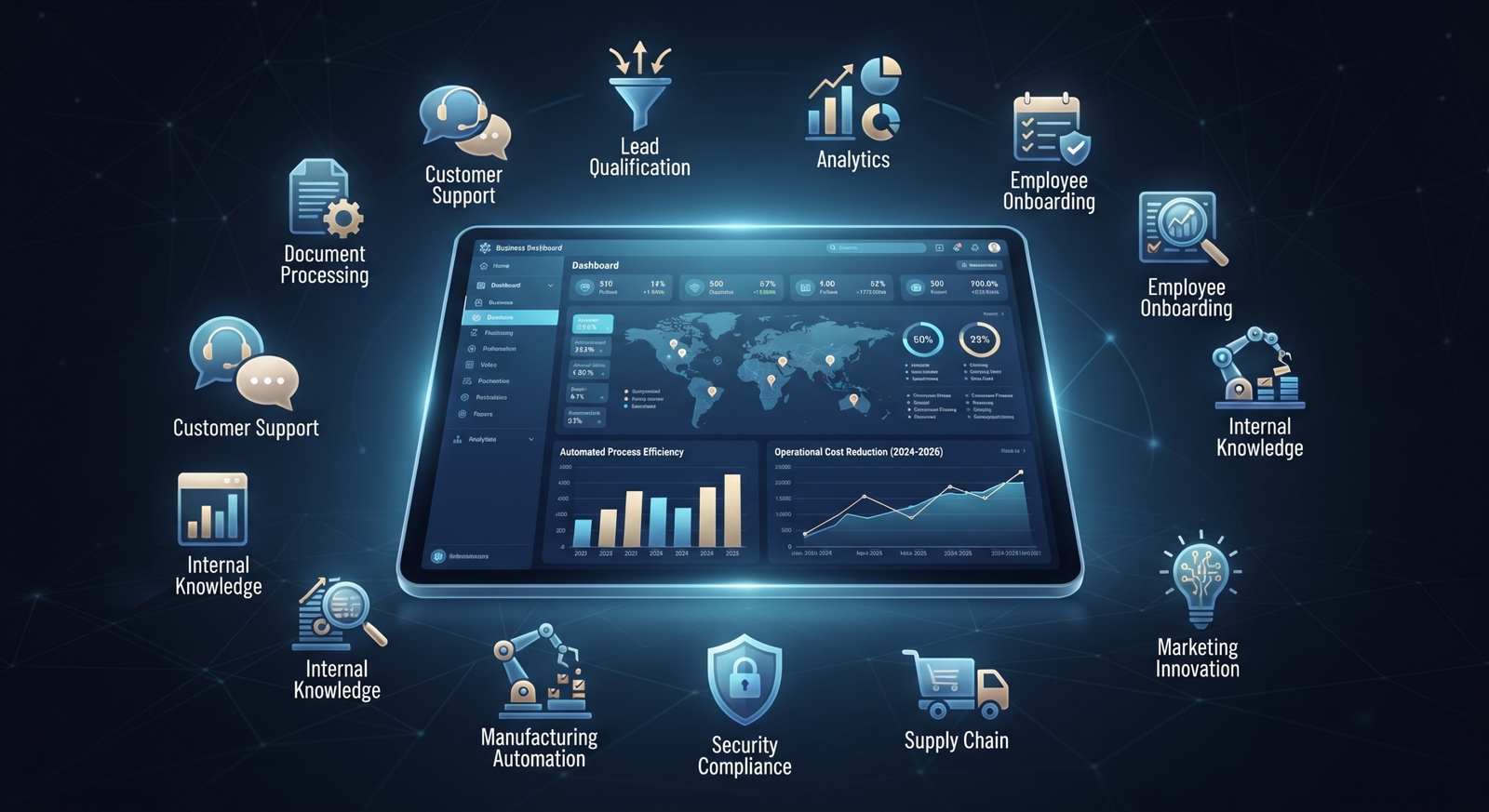
Look for bottlenecks, repetitive manual work, slow decision cycles, high support volume, knowledge gaps, or expensive operational errors.
A strong use case has a clear owner and a measurable outcome, such as reducing processing time, improving response speed, increasing task completion, or lowering the cost of a recurring process.
Step 2: Define Success Metrics
Before development begins, establish the baseline and target.
Possible metrics include:
- Processing time
- Cost per transaction
- Error rate
- Customer response time
- Employee productivity
- Task completion rate
- Escalation rate
- User satisfaction
Without measurable success criteria, it becomes difficult to determine whether the AI implementation is creating business value.
Step 3: Assess Data and System Readiness
Identify the data required for the use case and evaluate its quality, ownership, permissions, and accessibility.
Also map the systems the AI solution must interact with. This could include CRM, ERP, customer support, document management, analytics, or internal databases.
The goal is to understand the real environment before designing the architecture.
Step 4: Choose the Right AI Approach
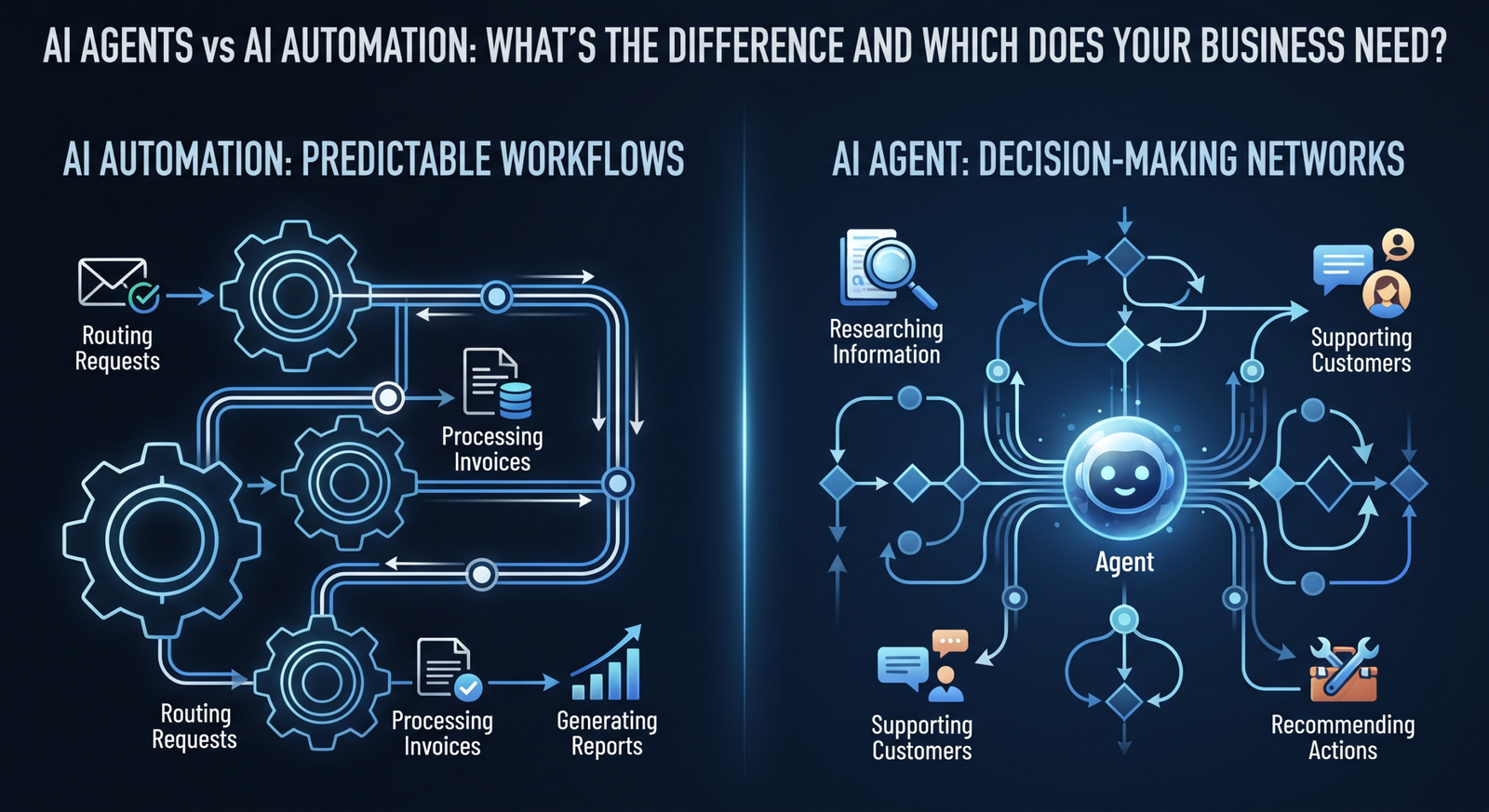
Not every problem requires the same technology. Depending on the use case, the solution may involve machine learning, generative AI, retrieval systems, computer vision, predictive analytics, AI automation, or AI agents.
Choose the simplest approach capable of meeting the business requirement. Complexity should be earned by the problem, not added for spectacle.
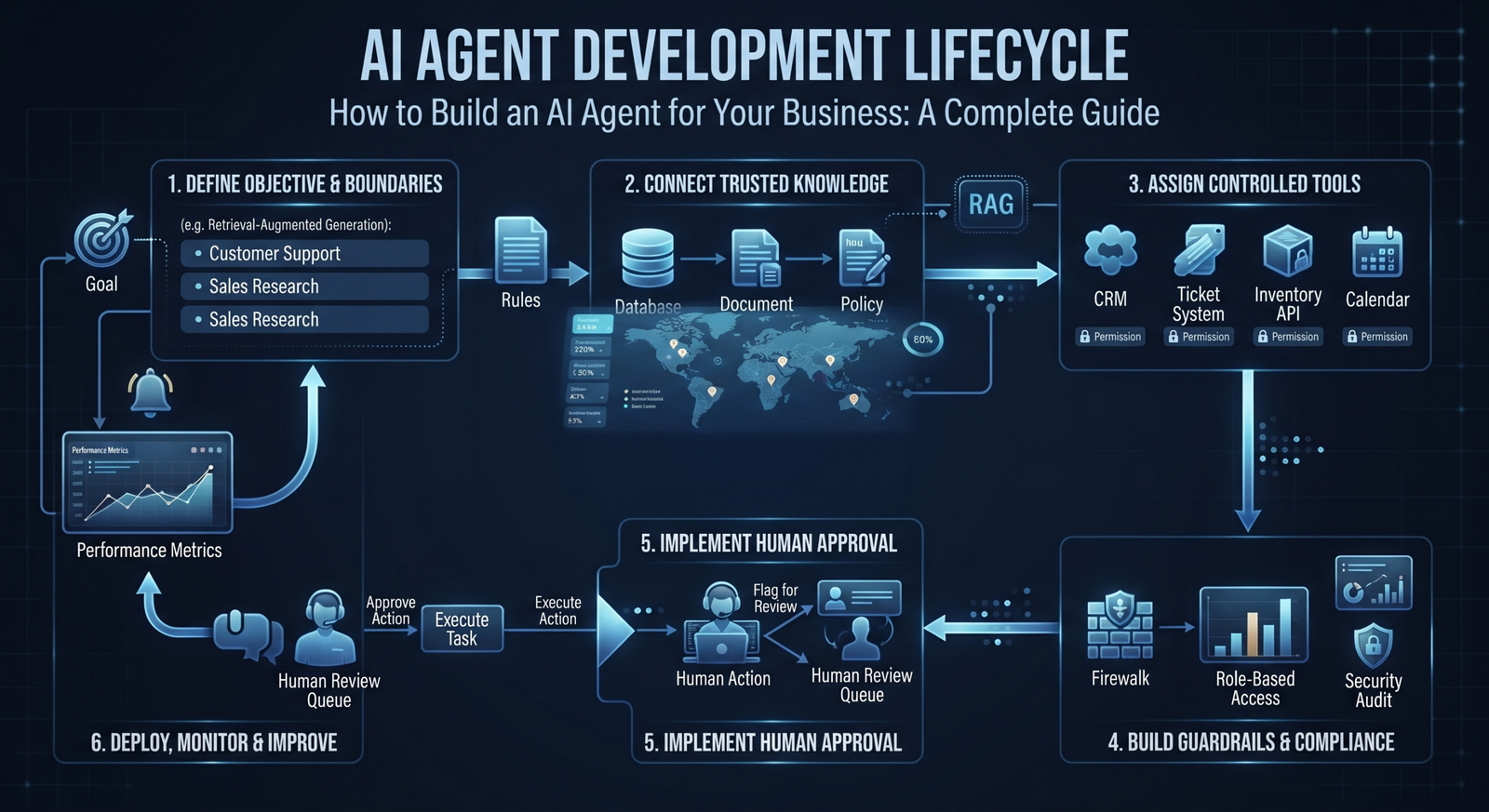
Step 5: Design the Architecture and Governance Model
Enterprise AI architecture should define where data flows, where models run, how systems communicate, and how access is controlled.
Governance should clarify who owns the system, who can approve changes, how data is handled, how incidents are reported, and how performance is monitored.
This is also the stage to define logging, audit requirements, retention policies, and human oversight.
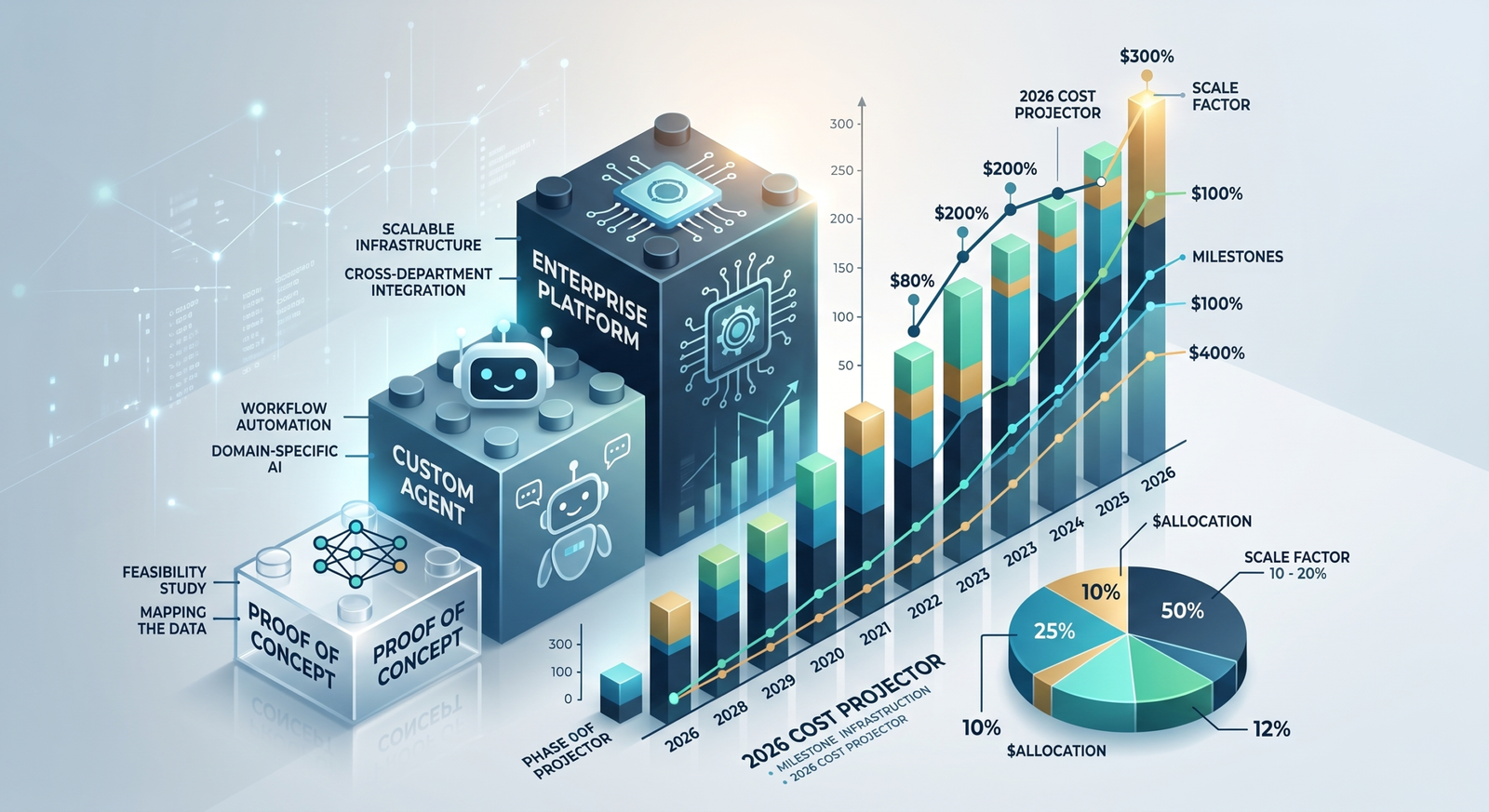
Step 6: Build a Proof of Concept
A proof of concept tests whether the core technical approach can work. Keep the scope focused.
For example, instead of building an AI assistant for the entire company, test it with one department and one approved knowledge domain.
The proof of concept should answer important questions about accuracy, usability, integration feasibility, security, and expected business value.
Step 7: Move From Prototype to Production
A prototype proves possibility. Production requires reliability.
This stage may include:
- User authentication and role-based access
- Integration with production systems
- Error handling and fallback behavior
- Monitoring and observability
- Security testing
- Performance and load testing
- Backup and recovery planning
- Documentation and operational procedures
These engineering layers are often what separate an impressive demo from a dependable enterprise application.
Step 8: Test for Performance, Safety, and Real-World Behavior
Test the system using realistic scenarios, not only ideal prompts or clean datasets.
Evaluate edge cases, incomplete information, unexpected inputs, system failures, unauthorized requests, and situations where the AI should refuse or escalate.
For generative systems, establish evaluation criteria for quality, groundedness, consistency, and safe tool use.
Step 9: Deploy Gradually
A phased rollout reduces operational risk. Start with a limited user group, collect feedback, and monitor the results.
Gradually expand access when the system demonstrates reliable performance. Keep rollback plans and human support available during early deployment.
Step 10: Monitor, Govern, and Improve
AI systems change as models, data, user behavior, and business processes change. Production implementation therefore requires ongoing monitoring.
Track technical metrics and business outcomes. Review errors, escalation patterns, user feedback, and changes in operating costs. Update knowledge sources, prompts, workflows, and models through a controlled change process.
Common Enterprise AI Implementation Mistakes
Several patterns repeatedly cause trouble:
- Starting with technology instead of a business problem
- Attempting to automate everything at once
- Ignoring data quality and permissions
- Treating a prototype as production-ready
- Giving AI systems unnecessary access
- Skipping evaluation and monitoring
- Failing to define ownership and governance
- Measuring activity instead of business outcomes
Avoiding these mistakes can save significant time and investment.
Conclusion
Successful enterprise AI implementation is a journey from business strategy to production engineering. The strongest programs begin with a measurable problem, validate the technical approach through a focused pilot, and then add the security, integration, monitoring, and governance required for scale.
AI can create substantial value when it is connected to real workflows and managed as a long-term operational capability.
Xhylo helps organizations move through this journey, from AI strategy and solution design to custom development, integration, deployment, and ongoing optimization.